Body Doubling for Exercise: How It Solves the PT Home Exercise Program Problem
Emma · April 30, 2026 · 10 min read
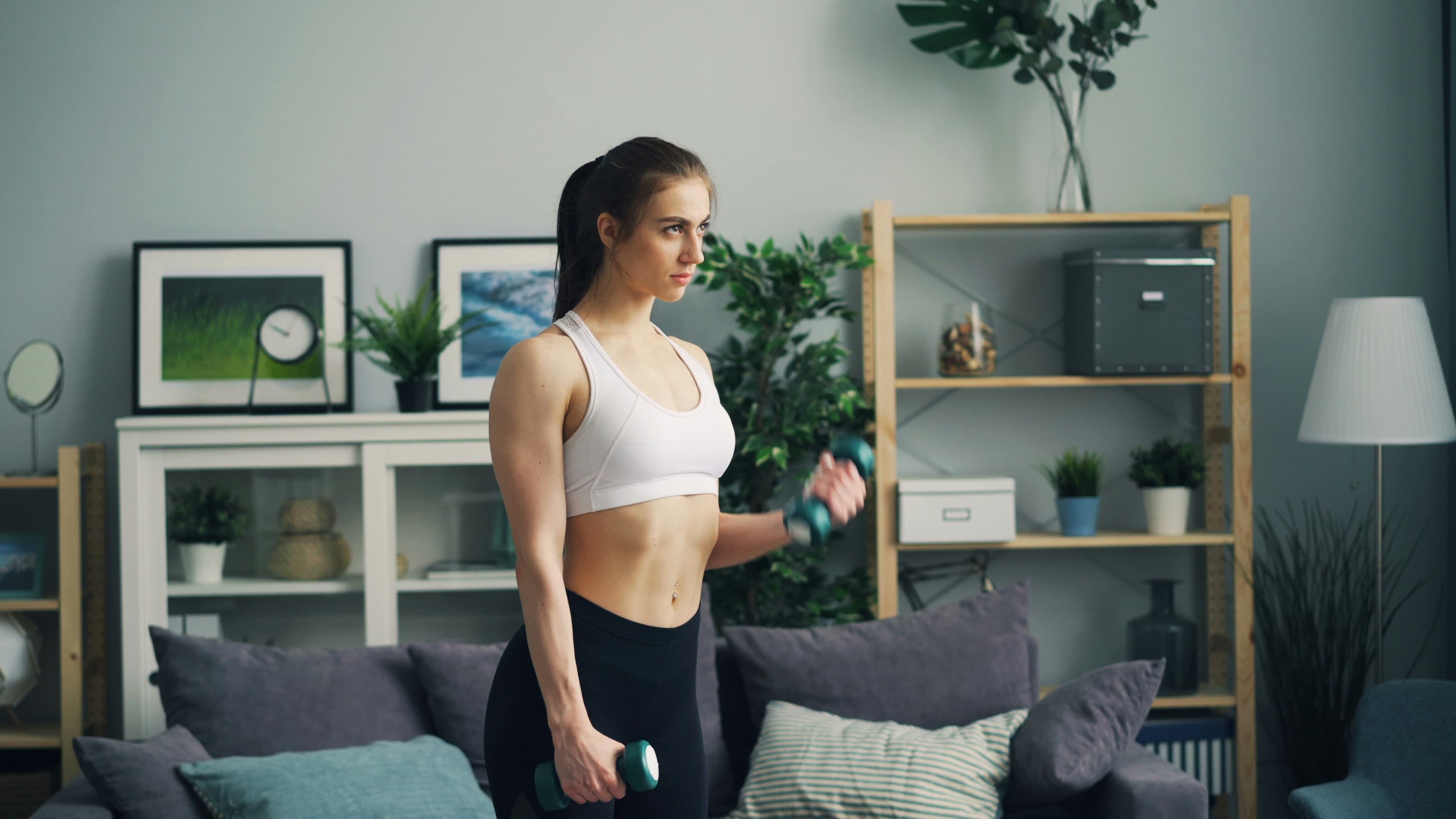
Every physical therapist I've ever worked with has the same look when they ask if I've been doing my home exercises. It's a polite, slightly tired half-smile that says they already know the answer. We both pretend, they hand me a printout of the next set of exercises, and I half-do those too. The exercises were never the problem. The problem was that I'd planned to do them at 7pm on Tuesday, then it was 9pm and I was on the couch, and the resistance band was still in the drawer where I'd left it on Sunday.
If you've ever been prescribed a home exercise program, this rhythm probably feels familiar. The clinical term is non-adherence, but in real life it just feels like being a bit of a flake about your own recovery. There's a fix that almost no one in PT is talking about yet, and it has nothing to do with motivation, discipline, or another reminder app. It's called body doubling for exercise, and it's the most reliable thing I've ever found for actually doing the exercises my PT cared about.
The PT compliance problem nobody really talks about
Adherence to physical therapy home exercise programs (HEPs) is famously poor. Reviews of the literature pin non-adherence somewhere between 30 and 65 percent depending on how it's measured, and the Sluijs group's classic survey of physiotherapy patients found that only about a third complied fully with their prescribed exercises. That range has been remarkably stable for decades. It doesn't matter much whether the program is for a knee replacement, low back pain, a rotator cuff repair, or postpartum recovery. The exercises change. The prescription changes. The compliance number doesn't.
What's interesting is that PTs have tried almost every reasonable intervention. Printed sheets. Branded YouTube channels. Custom apps with reminders, video demos, and progress tracking. Text message nudges. Gamified streaks. A 2024 panoramic meta-analysis covering more than thirty systematic reviews of adherence interventions found that most produce, on average, small effects on adherence at best, and many produce none at all. Digital reminder and tracking tools, in particular, have not consistently moved the needle. The bottleneck isn't information or motivation or tracking. It's something more basic.
The exercises themselves are usually short, often 10 to 20 minutes, and rarely difficult. You know what to do. You've been shown the form. You have the resistance band. The barrier between you and a finished session is almost entirely the friction of starting, and reminders don't reduce friction - they just remind you that you're avoiding it.
The reward gap nobody warns you about
There's another piece to this that almost no one mentions out loud, which is that PT exercises are designed to feel underwhelming. A good home program for a rotator cuff repair, an Achilles tendinopathy, or postpartum pelvic floor recovery is mostly slow, controlled, low-load work. You don't break a sweat. You don't finish red-faced and elated. You finish feeling roughly the same as when you started, maybe a little fidgety, possibly mildly bored.
That isn't a flaw in the program, it's the whole point. Tendon remodeling is driven by sustained, controlled mechanical strain, which is why heavy slow resistance protocols use deliberately slow tempos - load a tendon too quickly and it stores energy elastically rather than producing the strain signal that drives adaptation. Early post-surgical rehab is intentionally low-load because the repaired tissue can't safely tolerate anything else. Pelvic floor and rotator cuff work runs on long isometric holds because slow, sustained contractions are how those muscles and the neural circuits driving them actually get stronger. The exercises are slow because the underlying biology is slow.
The mood economics make this harder. Beta-endorphin release rises only modestly during low and moderate exercise and then climbs steeply once intensity passes roughly 75 to 80 percent of VO2 max, and rehab dosing is meant to sit well below that threshold. You're getting the tissue benefit and almost none of the chemical reward. The hard workouts you used to do paid you back in mood. Your home exercise program does not. That's a big part of why running, lifting, or yoga are easier to stay consistent with than a five-minute set of glute bridges, and it's why getting yourself to do the rehab exercises usually needs structure that lives outside your own head, because inside your head is going to keep voting against them.
Why body doubling for exercise works where reminders don't
Body doubling, in its plainest form, is when you do something alongside another person who is doing the same thing, and the presence of that person lowers your activation energy enough that you actually start. The ADHD community popularized it for desk work, where it's now standard advice. People use platforms like Focusmate to book a 50-minute video session with a stranger, both keep their cameras on, and they each work on their own task in parallel.
The mechanism isn't mysterious. Social psychologists call it social facilitation, and the foundational research goes back to Robert Zajonc in 1965, who showed that the mere presence of another person sharpens performance on tasks you already know how to do. PT exercises fit this description almost perfectly. You're not learning a new skill mid-session, you're executing a familiar one, and the part of your brain that resists starting tends to back down when someone else is in the room.
Body doubling for exercise also acts as what behavioral economists call a pre-commitment device. When the calendar invite is just you, breaking it costs nothing. When the calendar invite includes another human who is going to log on at 7pm expecting you to be there, the cost of bailing changes shape. It stops being a private decision and starts being a small social one, which is why accountability partners consistently outperform self-monitoring in the adherence literature, even when the partner has no expertise and no role beyond being present.
What a body doubling PT session actually looks like
The setup is so straightforward it sounds like it shouldn't work, and that minimalism is actually the point. You schedule a 25-minute session with another person. At the start time you both join a video call. You say a quick hi, tell each other roughly what you're working on - "I've got my ankle rehab, three sets of calf raises and some band work," "I'm doing my back program, glute bridges and bird dogs" - and then you start a timer.
For the next 20 to 25 minutes, you both do your own thing. Nobody is coaching, nobody is correcting form, nobody is following along with the same workout. The other person is on the screen in the corner doing their own routine while you do yours. At the end you check in, say what you got through, and log off. There's no class, no instructor, no plan you have to follow except the one your PT already gave you.
What makes this different from a workout buddy or a Zoom call with a friend is the structure and the parallelism. You're both exercising. You're not chatting. You're not waiting on each other. The expectation is just that two people both showed up to do their own programs at the same time, and that expectation is enough to get you off the couch.
The research behind accountability and home exercise programs
The PT-specific evidence on accountability is stronger than most patients realize. The Cochrane review by Jordan and colleagues on interventions for chronic musculoskeletal pain concluded that supervised exercise sessions and behavioral approaches like graded exercise and goal setting consistently improved adherence over self-directed programs. More recent work on connected health interventions has shown that adding any form of human-in-the-loop structure - tele-rehab, video check-ins, peer accountability - tends to outperform reminders and tracking by a meaningful margin.
The interesting thing about body doubling is that it sits one step further along that same line. Most accountability research compares unsupervised home programs to programs with periodic check-ins, where the check-in happens after the session was supposed to occur. The check-in catches you not having done it. Body doubling doesn't do that. The accountability lives inside the session, not after it. There's no "I'll do it later, I'll tell my PT I did" loophole, because the session either happens or it doesn't.
For chronic conditions where adherence determines almost everything about long-term outcomes - low back pain, knee osteoarthritis, frozen shoulder, hypermobility, post-surgical rehab - the difference between 40 percent adherence and 80 percent adherence is the difference between getting better and not. Most patients I've talked to know they're in the wrong half of that distribution and don't know what to do about it. Body doubling for exercise turns out to be a direct answer.
Who this works for in the rehab world
Post-surgical rehab is the most obvious fit. After an ACL reconstruction, a rotator cuff repair, or a hip replacement, the home exercises are the entire mechanism by which you regain function. Skip them and you don't recover, you just stiffen up. The exercises are usually short, often awkward, and never something you look forward to, which makes them a near-perfect candidate for body doubling.
Chronic pain patients are the second big group. People with low back pain, fibromyalgia, or chronic shoulder issues often have decade-long relationships with PT exercises that they know help and still skip. The pattern is almost universal: a flare-up sends you back to PT, you do the program religiously for a few weeks, the pain settles, you stop, the pain comes back six months later. A recurring body doubling session three times a week breaks that cycle without any new motivation. The structure does the work willpower used to fail at.
Postpartum and pelvic floor rehab is another natural one, particularly for new parents doing pelvic floor exercises in the same fifteen minutes they could be staring at the wall, and who almost always end up choosing the wall. Sports rehab, post-cardiac maintenance, vestibular therapy, and balance work for older adults all share the same structure - short prescribed exercises, low intrinsic motivation, high payoff if completed - and all benefit from the same fix. The maintenance phase, where patients who finished formal PT have been told to keep going forever, is where almost all the apps and wearables stop working, because the novelty wears off. A standing weekly body doubling session is one of the few things I've seen people actually maintain at that stage.
Why I built MoveWith for this
That ankle, that shoulder, that back - whatever yours is, the prescription works if you do it, and the most reliable way I've found to do it is having another person on a video call doing theirs at the same time. I built MoveWith because there was no app that did this for fitness or PT, and I wrote a longer piece on body doubling for fitness if you want the full background - the same mechanism behind body doubling for workouts applies just as cleanly to a rehab program. Your PT's plan is the plan. The app just makes sure the session happens.
If you've been prescribed a home exercise program and you've been doing the night-before-the-appointment cram, this is what you've been missing. MoveWith is live on iOS. Get it on the App Store and grab a body doubling partner for your next PT session - the exercises don't get more exciting, but they do start to actually happen.
Photo by Vitaly Gariev on Unsplash
MoveWith is body doubling for fitness.
Get matched with a real person and actually do your workout.
Get on the App StoreMore from the blog
Exercise for ADHD: Why It's So Hard to Start, and What Actually Helps
Exercise for ADHD is one of the best non-drug treatments there is, and one of the hardest to start. Here's the fix, and the research behind it.
June 2, 2026 · 6 min read
Body Doubling: Why You're More Productive Around Other People (and What to Do About It)
Body doubling is the productivity strategy you've been using your whole life without knowing it. The science behind why it works, what doesn't work, and exactly how to use it.
April 27, 2026 · 12 min read
Why Body Doubling Works for Fitness (And Why It's Different from Desk Work)
Body doubling changed how people with ADHD get work done. It works even better for fitness, but the transition from desk work to physical activity isn't always seamless.
April 17, 2026 · 7 min read